I survived the system because of teachers who made their classrooms their own organization. They built trust, purpose, accountability, and belonging even when the larger system struggled. I also watched what happened when those organizational conditions began to deteriorate. Great teachers quietly left. Morale declined. Student outcomes followed. Leaders often did not know there was a problem until the consequences became impossible to ignore. Nobody was measuring the heart before the heart attack. That is why ISEE exists.
About ISEE LLC
The organizational conditions behind your results are measurable. Most leaders have never seen them.
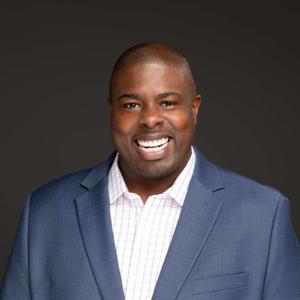
ISEE LLC was founded by Dr. Gabriel Woods — scholar, professor, and executive whose career has operated at every level of educational organizations: classroom, district leadership, higher education administration, board governance, and executive search. ISEE was built because no existing firm was asking the right question: not what an organization produces, but what conditions are producing it.
Organizational conditions are the six factors that determine whether any district initiative, hire, or dollar converts into results: whether staff trust leadership enough to implement what they are asked to implement; whether the strategy is clear enough that every principal can name it; whether accountability exists in practice and not just on paper; whether leadership capacity is deep enough to absorb a transition; whether execution follows decisions reliably; and whether the organization is resilient enough to absorb a crisis without collapsing. When these conditions are broken, more money, more programs, and better teachers produce the same outcomes, because the organization underneath them is not built to convert resources into results. That is what ISEE measures.
Master of Management Candidate, AI and Organizational Strategy — Georgia Tech Scheller College of Business
Doctorate in Education — Liberty University
Master of Science, Strategic Leadership Development — Clayton State University
Master of Music Education — Anderson University
Dual Appointed Professor, University System of Georgia
Vice President of Professional Development, Georgia Tech Graduate Student Government Association
Presented at more than 15 national education conferences
Oversaw district budgets exceeding ten million dollars across board and administrative roles
Co-authored undergraduate degree programs at Savannah State University
Featured in Won't Lose This Dream by Andrew Gumbel, University of California Press
The founder's story
Scholar. Professor. Executive. Diagnostician.
Dr. Woods has served at every level of educational organizations: as a district leader, higher education administrator, board member, education program designer, and executive search consultant for superintendent searches. He has co-authored undergraduate degree programs, oversaw budgets exceeding ten million dollars, and presented at more than fifteen national education conferences. His work appears in Andrew Gumbel's Won't Lose This Dream, published by the University of California Press. ISEE is built on that full-system vantage point: the diagnostic distance that only comes from having operated inside the conditions being measured. ISEE exists because the children in those buildings deserved an answer nobody was providing.
ISEE contributes research and professional development content to state and national education associations.
ISEE findings belong to your district. Nothing leaves your organization without your authorization.
ISEE works with districts of every size, including small and rural systems.
The method
The STELAR Framework
Six cross-cutting organizational dimensions. One diagnostic instrument. Built around the conditions the research says matter most.
S: Strategy
Whether stated goals are alive in daily decisions. The gap between strategic plan and daily execution is documented as the primary driver of district failure.
T: Talent
Whether conditions exist for teachers and staff to stay. Not whether positions are filled, but whether organizational conditions support retention.
E: Execution
Whether operational systems function consistently, measured daily not by annual report or point-in-time audit.
L: Leadership
Whether leaders are visible and responsive, measured by those being led, not by the leader's own self-report.
A: Accountability
Whether commitments are kept at every organizational level. The most consistently documented condition across all five major research sources.
R: Resilience
Whether the organization sustains positive conditions under pressure, including during leadership transitions.
The STELAR Framework is built on five peer-reviewed and federally validated research instruments: the National Teacher and Principal Survey (National Center for Education Statistics); the School Organizational Health Questionnaire; the School Implementation Climate Scale; the National Center on Safe Supportive Learning Environments instrument suite; and the Georgia Brief School Climate Inventory. The framework is additionally consistent with peer-reviewed findings by Bryk and Schneider, Leithwood et al., and Grissom and Loeb — detailed on the Methodology page. Full instrument documentation available upon request.
Our intelligence
ISEE looks for the one condition driving symptoms across departments.
Rather than scoring each department in isolation, ISEE identifies the single cross-cutting organizational condition. A transportation problem and an HR problem often trace back to the same root condition.
What makes ISEE different
ISEE's unit of analysis is the organization as a system, not the department. The STELAR Framework captures whether conditions exist across the whole institution and connects those conditions to each other.
72-hour commitment
ISEE commits to written preliminary findings within 72 hours of data collection closing. A daily anonymous signal from the people who experience organizational conditions most directly, not a point-in-time interview cycle.